



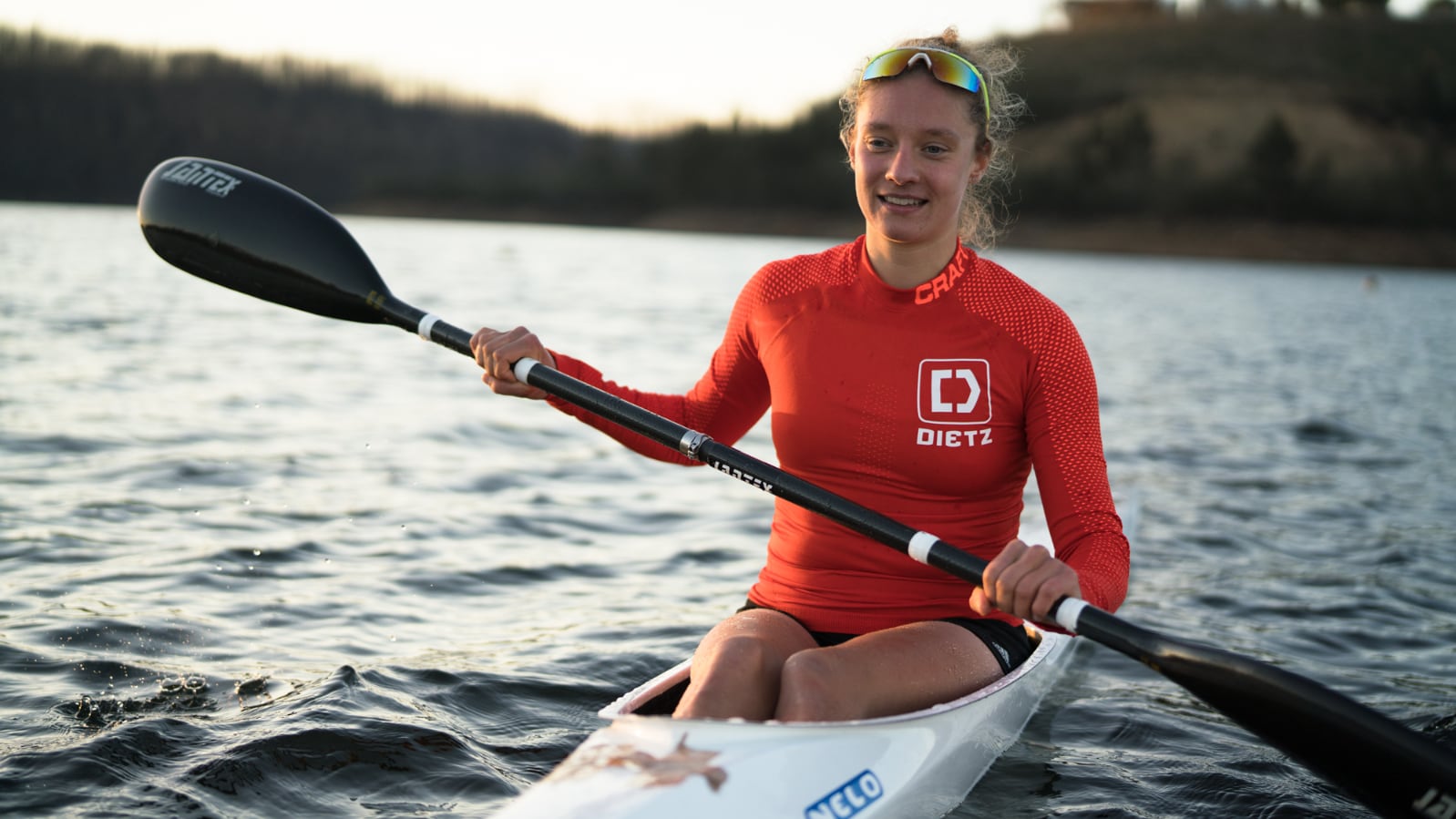
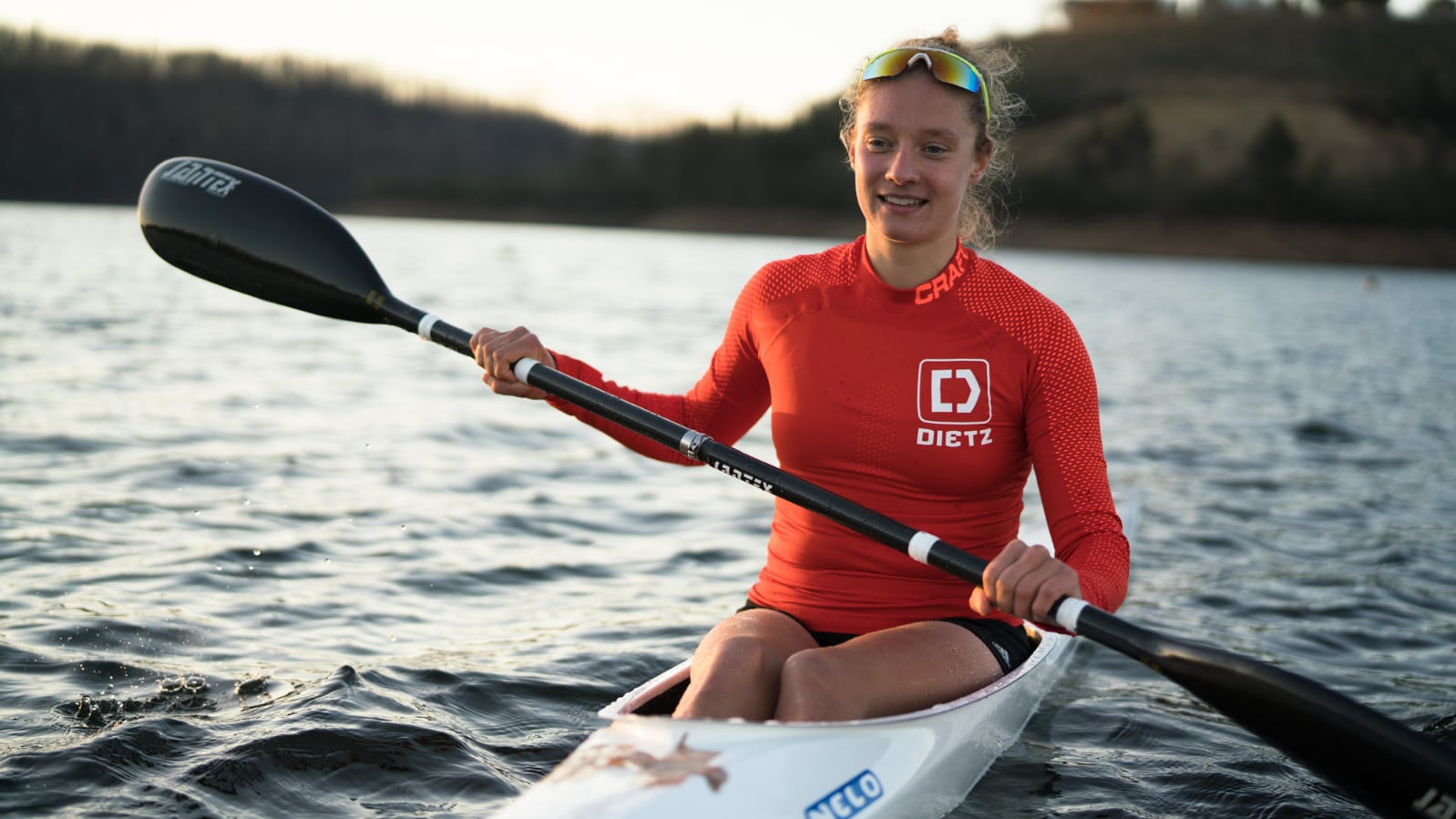
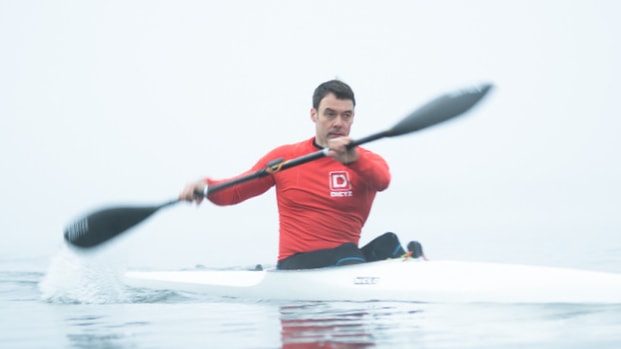
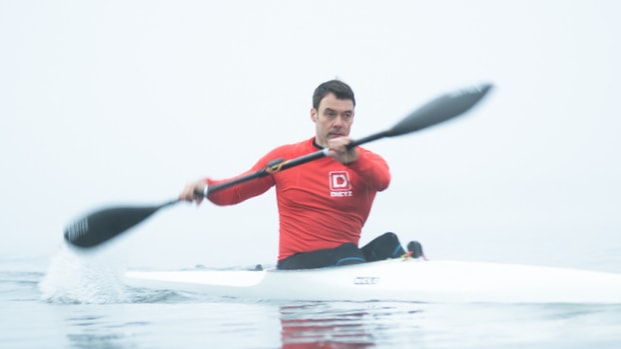
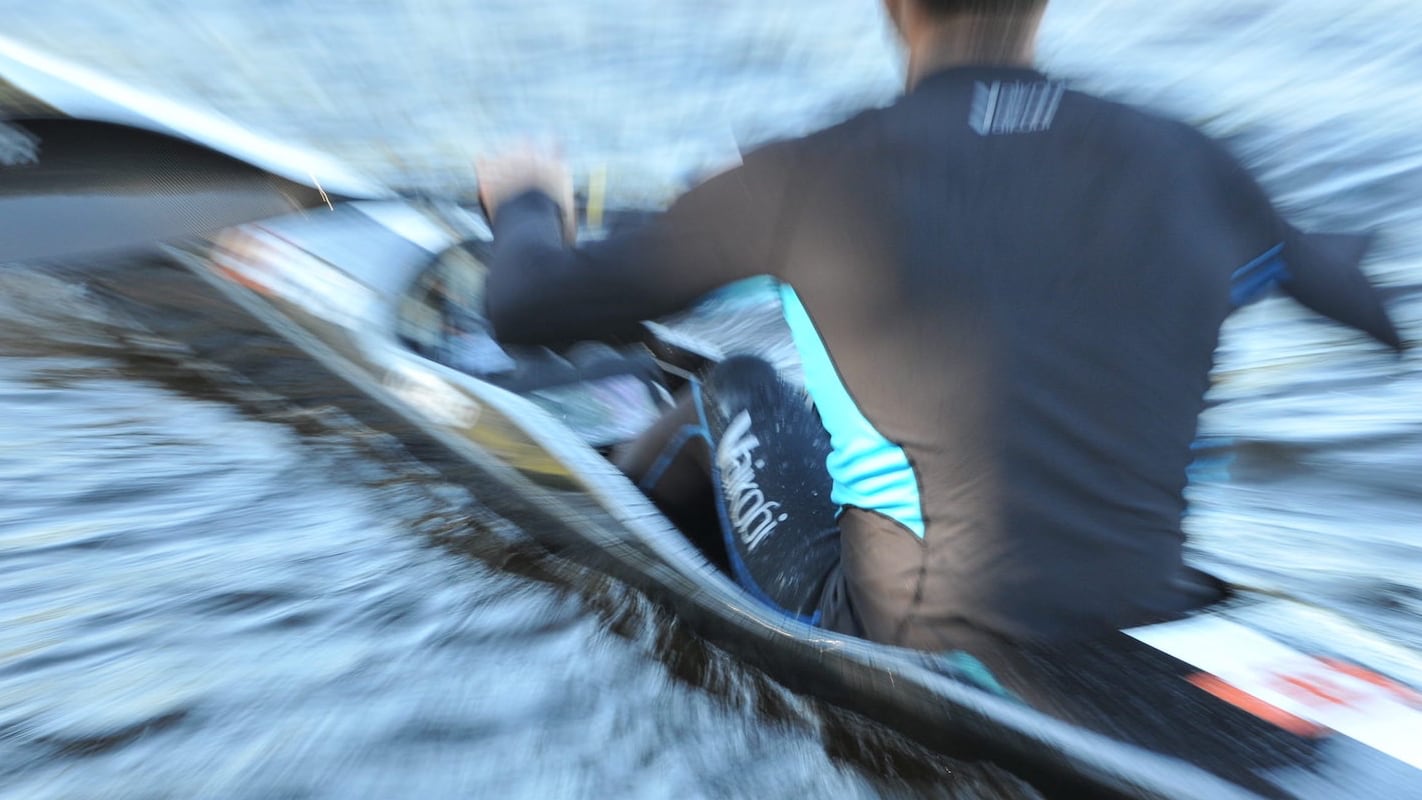
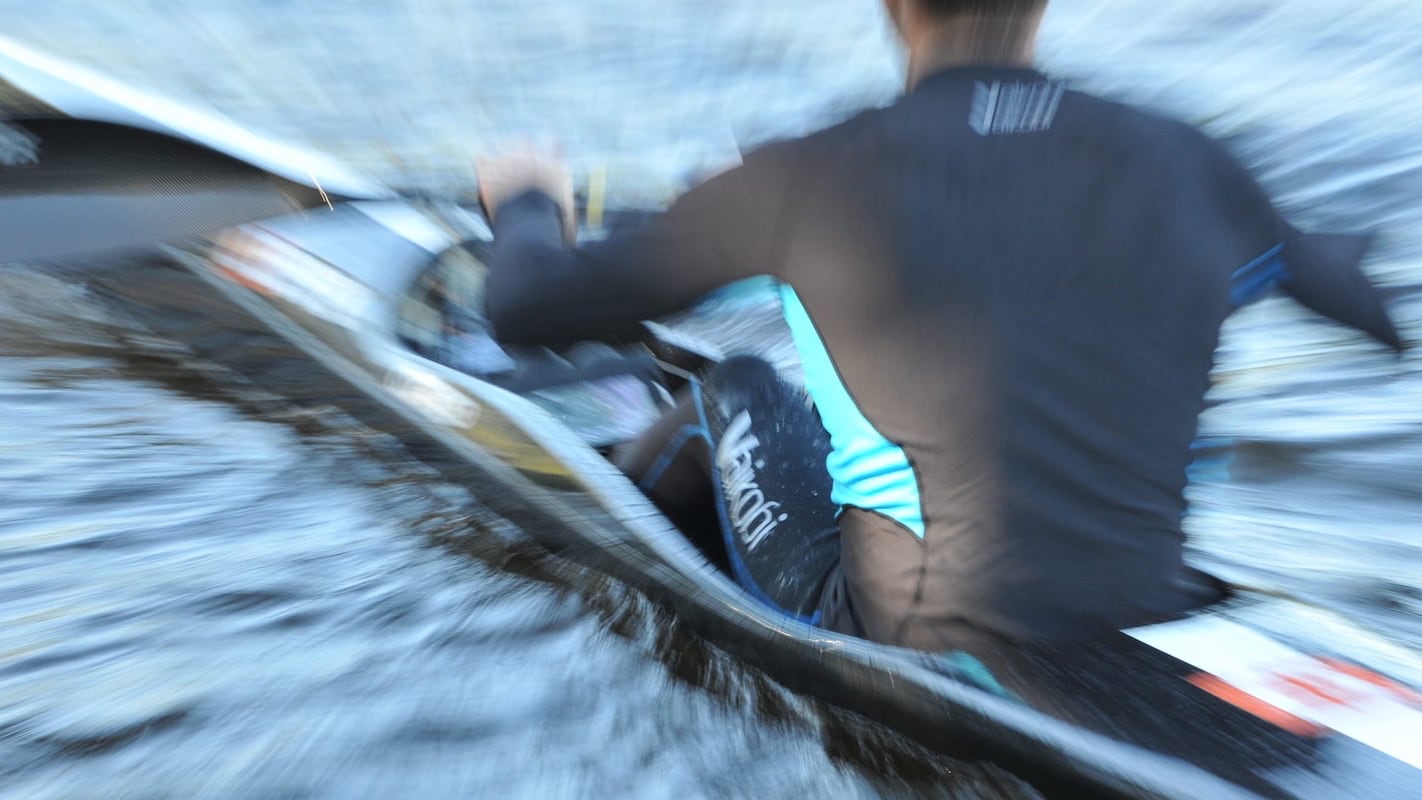
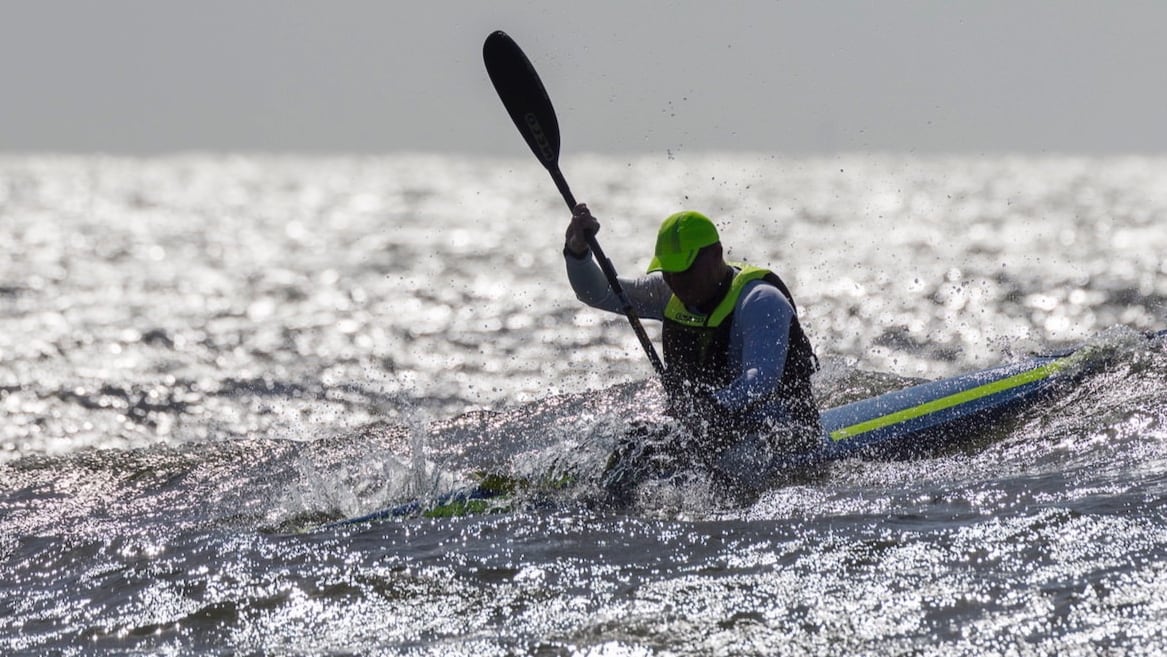
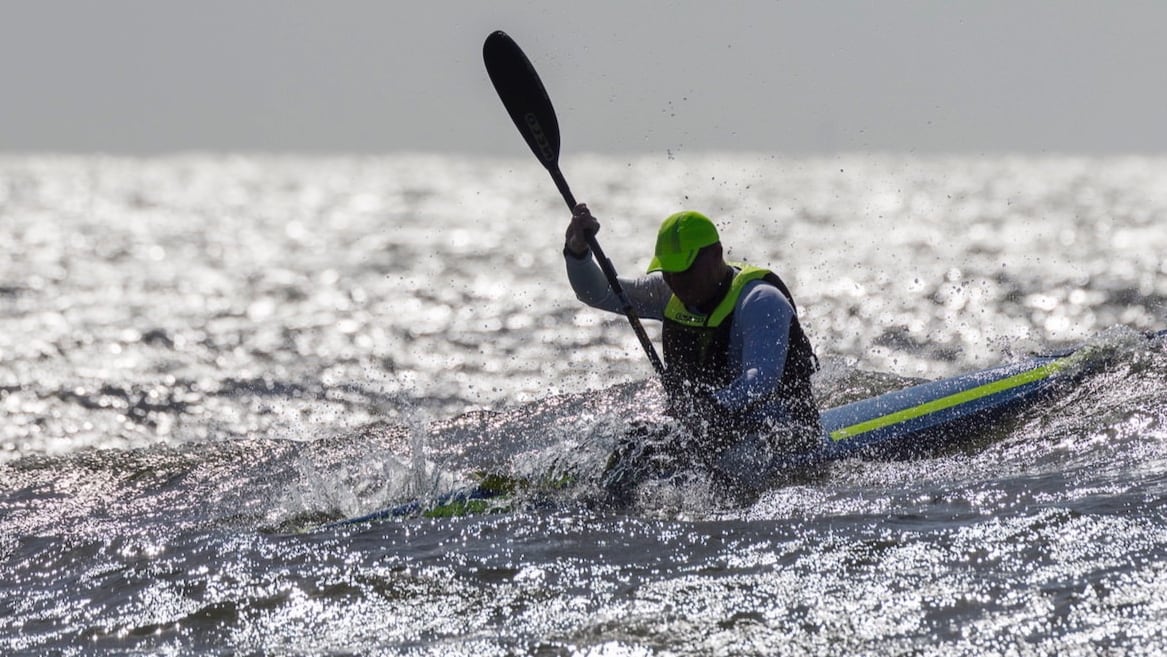


Training through autumn and winter means two opponents at once. The water is cold and your body heats up as you work. The short version: neoprene where you get wet. A paddle jacket with seals over a base layer where freedom of movement matters most. In milder conditions a windproof vest instead of the jacket is often enough. This guide is for short, intense sessions close to shore in a racing kayak, fitness kayak, surfski or on a SUP. Long tours follow different rules.
It is always a compromise
The well-known rule says: dress for the water temperature, not the air temperature. It is true. Water draws heat from the body many times faster than air, and the cold shock in the first minute after a capsize is more dangerous than the cooling that follows.
But if you paddle intervals, you overheat in clothing built for half an hour in the water. That is why many good sprint paddlers train in running gear in winter. It feels right in the boat and gives no protection at all if you capsize.
No single outfit is right for everyone. Each time, you weigh how much protection you need against how much heat you produce yourself. This guide gives you the basis for that call.
Two questions before every session
1. How likely am I to get wet? In a racing kayak on flat water, rarely. In a surfski there is constant spray, and in waves a swim is part of the game. On a SUP you stay dry for a long time, but when you fall, you go all the way in.
2. How quickly am I out again? Ten metres from the dock you are on land within a minute. On open water you have to be able to remount, with cold hands and in full winter kit.
The more often you get wet and the longer you might stay in the water, the stronger the case for neoprene. The less often and the shorter, the stronger the case for the lighter combination of jacket and base layer.
The three building blocks
Neoprene keeps you warm even when wet. It is the first choice wherever you are sure to get wet or end up in the water. For paddling we use thin neoprene clothing. In our view 3 mm is the upper limit if you want to stay mobile. Thicker suits of 5 mm and more come from surfing, where you spend most of your time in the water. For paddling they restrict movement too much.
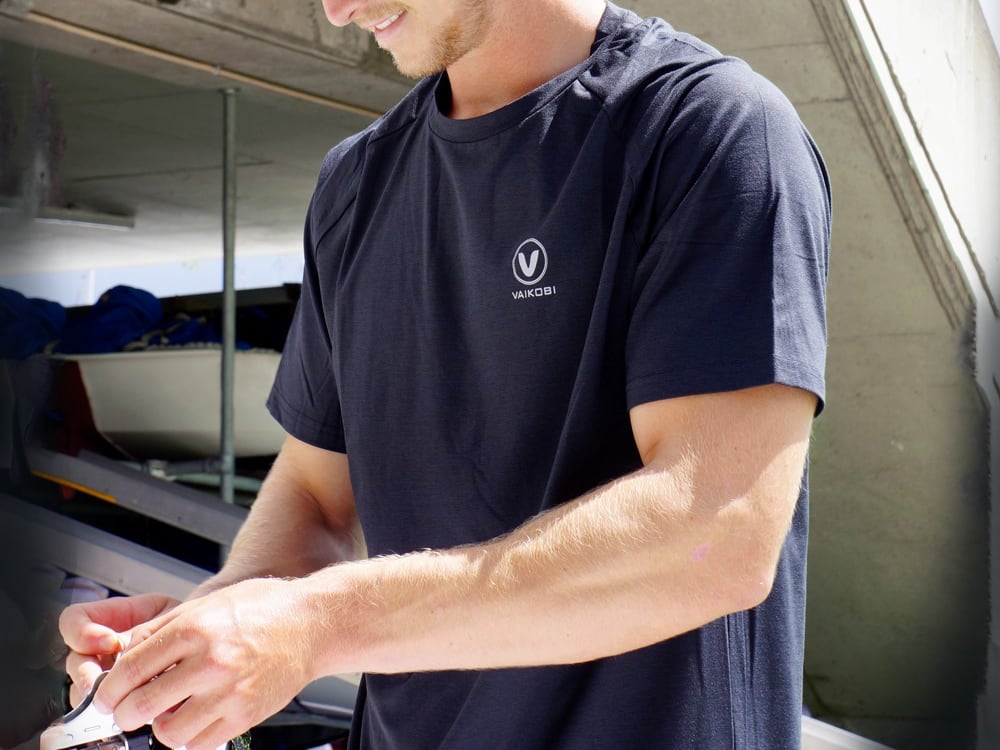
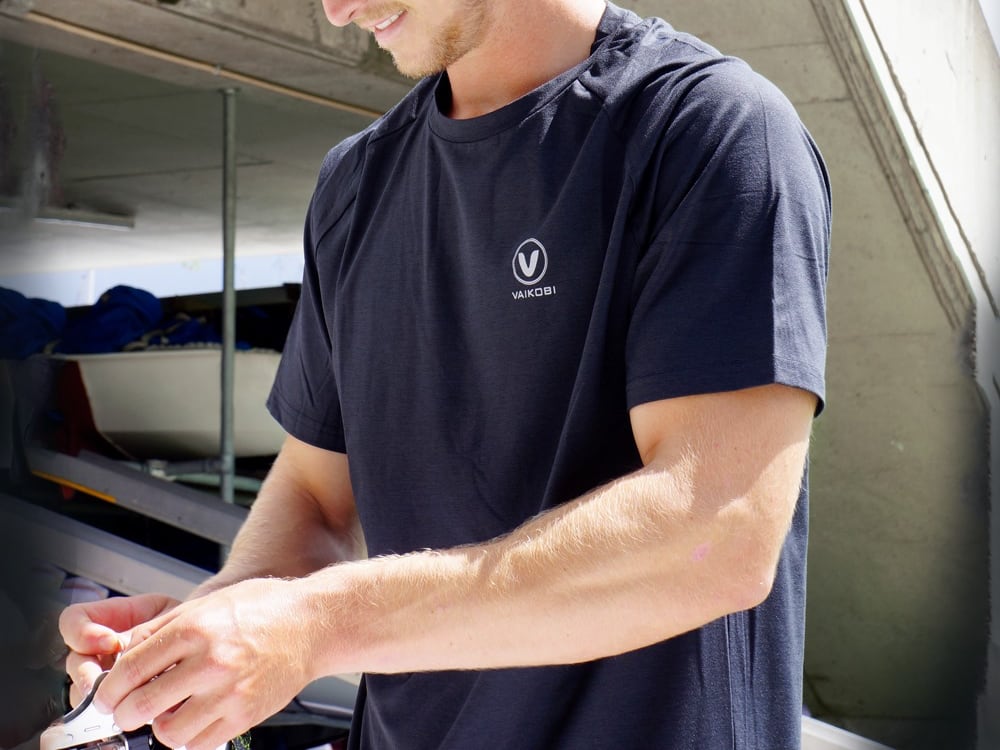
Paddle jacket with seals plus base layer. The jacket needs seals at the neck, wrists and waist. It does not have to keep you completely dry. What matters is that no cold water flushes through after a capsize, because the water flowing in is what cools you down. Underneath you build up in layers with a warm base layer, thinner or thicker depending on the temperature. Cotton stays at home.
Vest instead of jacket. In moderate temperatures a windproof vest such as the V Dry Paddle Vest in place of the paddle jacket is often enough. It keeps the wind off your torso and leaves your arms free. Wear it over the base layer or combine it with neoprene.
Racing kayak and fitness kayak
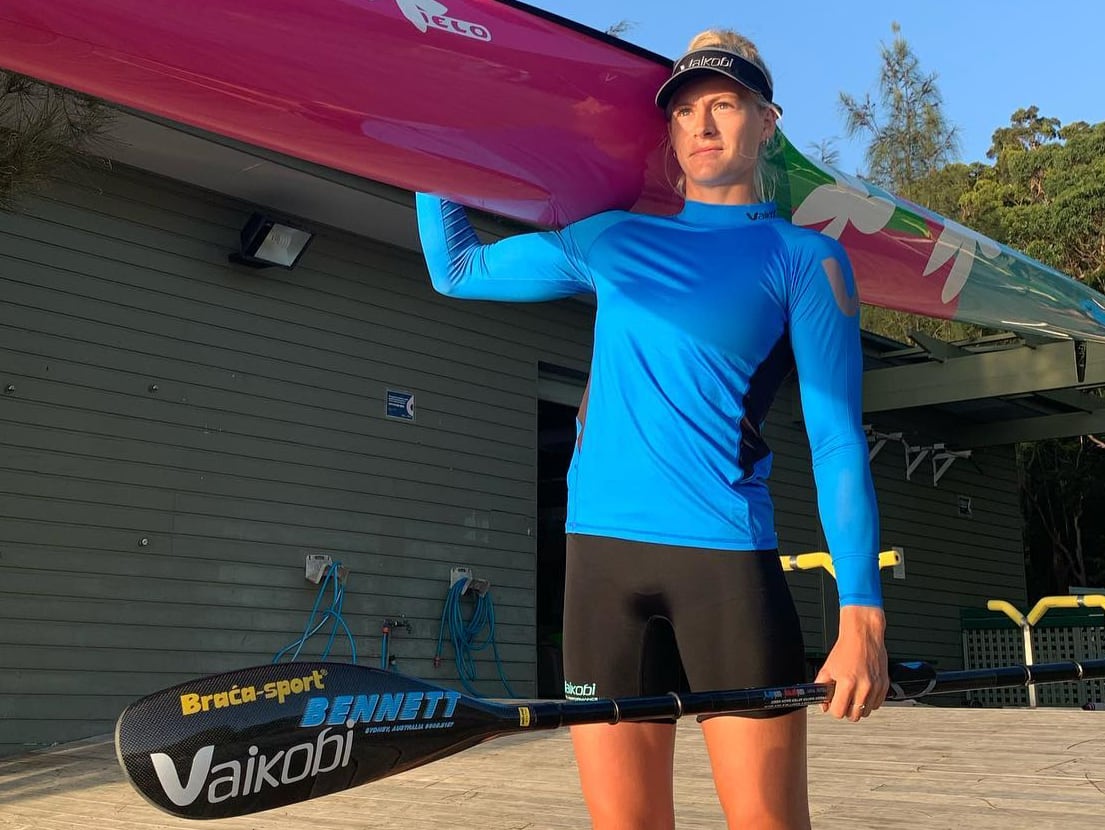
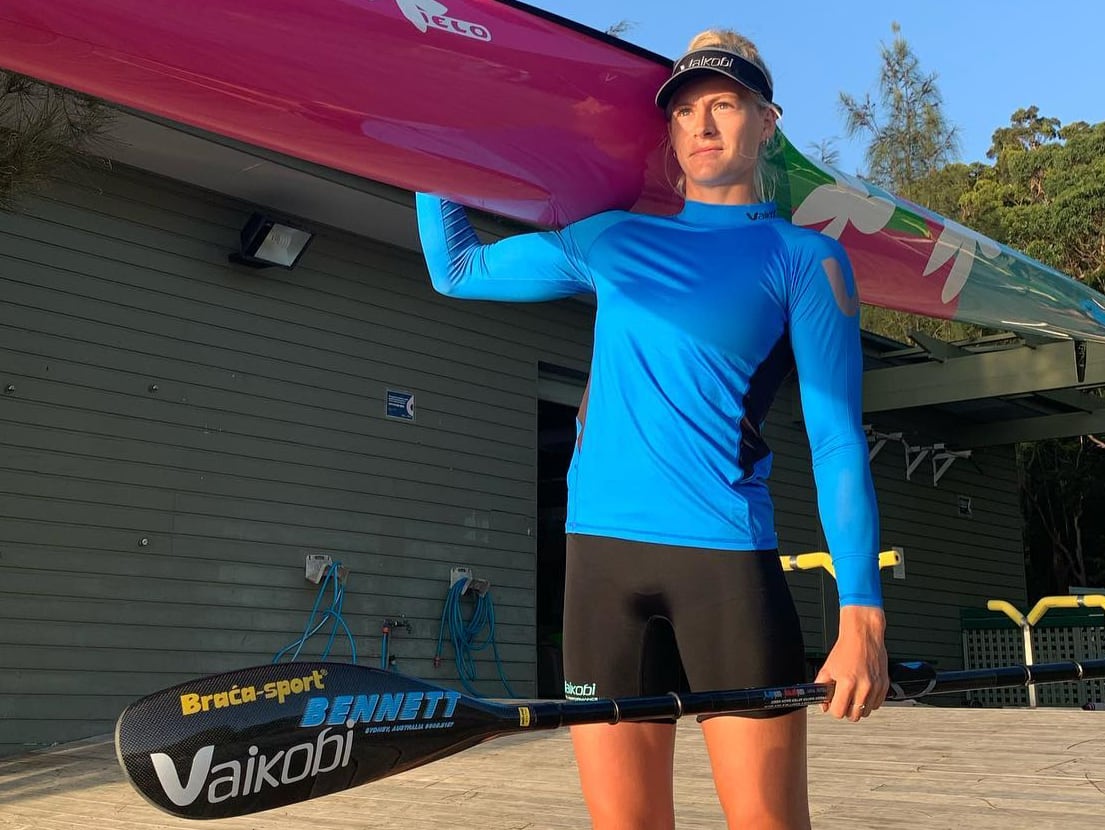
Here freedom of movement in the upper body matters most, and you are usually close to shore. Our first choice is a two-layer jacket such as the Ares Stretch Jacket or the Vaikobi V-Dry Performance Smock over a base layer from Vaikobi or Zhik. For the legs, the Vaikobi V Cold Flex Paddle Pant works well. It fits like running tights and sits comfortably under the spray skirt.

Surfski
In a surfski you sit in the open, the water comes from outside, and on open water a capsize can take longer to sort out. For the legs, normal neoprene pants are usually enough, for example the Vaikobi FlexForce 2 mm. Only when it gets very cold are dry pants such as the NRS Freefall Dry Pant (men, women) or the Vaikobi V Cold Flex GBS Pant in 3 mm worth it. The GBS pant is neoprene with taped seams and stays dry longer against constant spray. On the upper body, neoprene or a thermal top, with the V Dry Paddle Vest over it when it is windy.
SUP
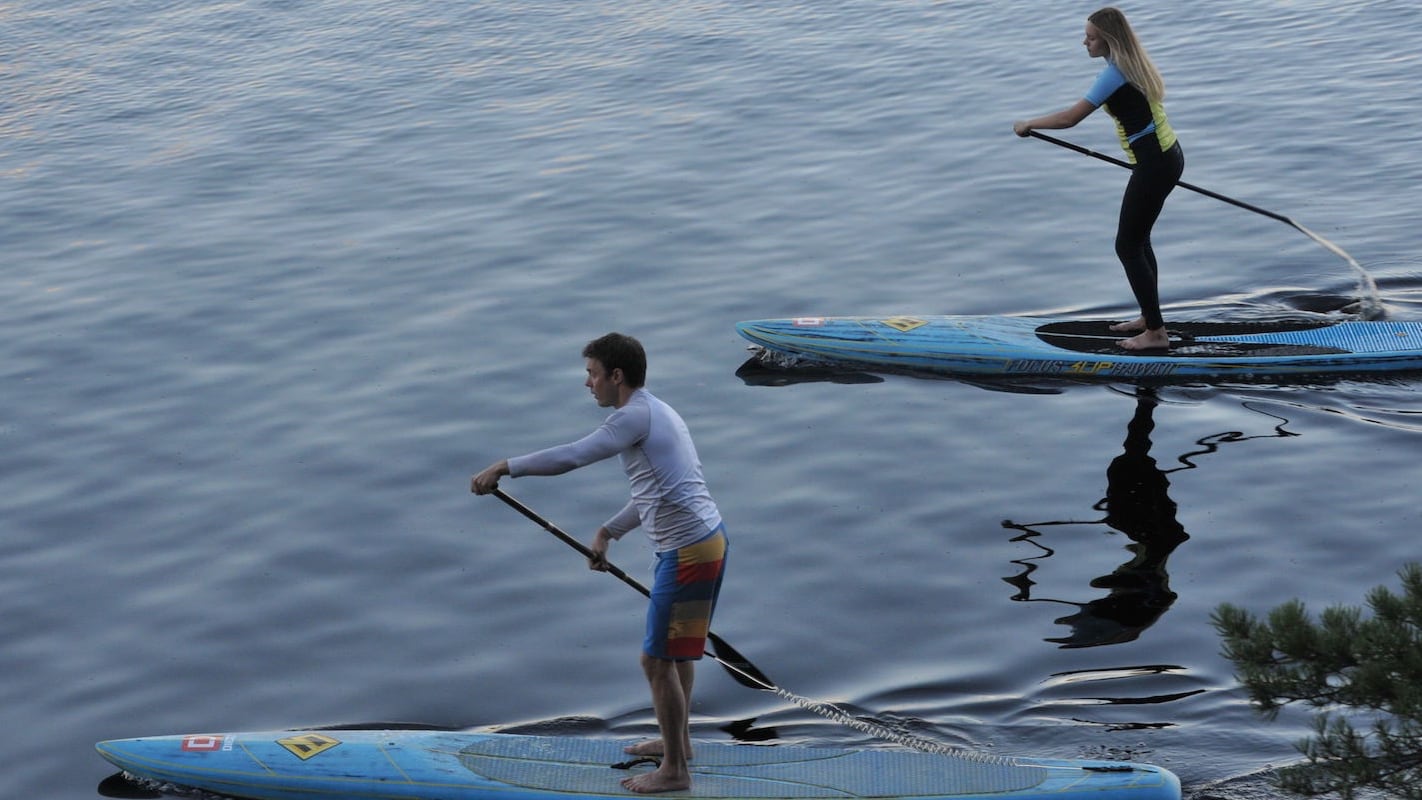
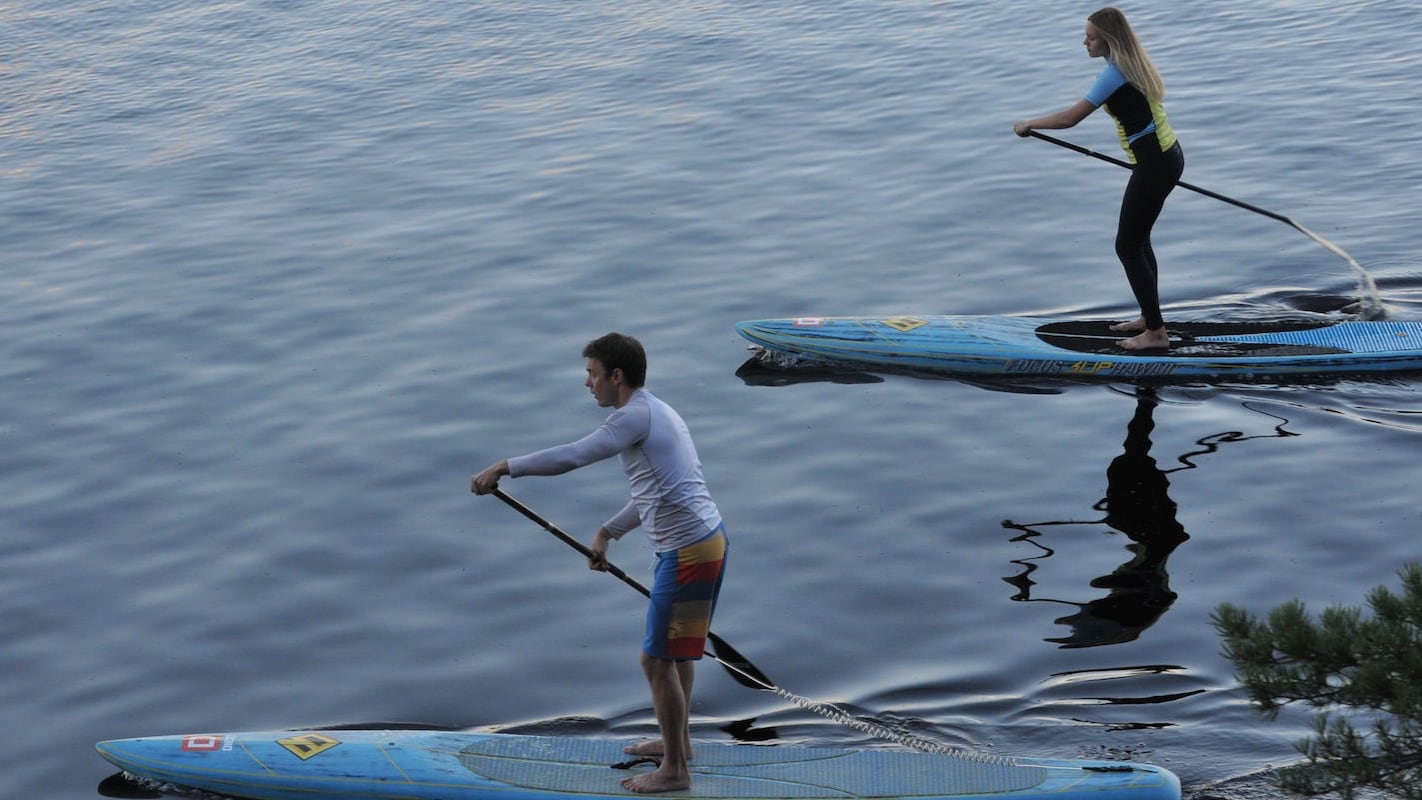
On a race board you generate a lot of heat and stand above the water. On flat water you can therefore dress almost as lightly as in a racing kayak. But remember: a fall always means full immersion. In waves, on downwinders or while you still fall often, neoprene on the legs is the better choice. A leash is a must in cold water, because the board is your fastest way out of the water.
What about a drysuit?
A drysuit is the answer when you really need to stay dry in rough conditions, especially when you are out for a long time. For short, intense sessions it has drawbacks. It restricts freedom of movement, and heat builds up under the suit. There are light, partly elastic models that ease this. They still do not match the combination of jacket and pants for freedom of movement. On top of that, separate pieces can be swapped one by one to suit the conditions, which makes you far more versatile.
Some guides name the drysuit as the first choice for cold water. That is because they compare it with thick full-body neoprene wetsuits. Our combination of thin neoprene, jacket and base layer is a different route, built for training.
Quick pick by water temperature
The table shows examples. If you feel the cold easily, go one row down. If you train hard and warm up quickly, stay longer in the lighter combination.
| Water | Racing kayak and fitness kayak | Surfski | SUP |
|---|---|---|---|
| above 10 °C | V Cold Flex Paddle Pant, base layer, V Dry Paddle Vest if windy | FlexForce 2 mm Pants, thermal top (V Cold Hydroflex), V Dry Paddle Vest if windy | V Cold Flex Paddle Pant, base layer, V Dry Paddle Vest if windy |
| 5 to 10 °C | V Cold Flex Paddle Pant, base layer, jacket with seals (Ares Stretch Jacket or V-Dry Smock) | FlexForce 2 mm Pants, neoprene top (FlexForce 2 mm or HydroSkin), V Dry Paddle Vest | FlexForce 2 mm Pants, thermal top (V Cold Hydroflex or Flex), V Dry Paddle Vest |
| below 5 °C | as above, warmer top under the jacket (V Cold Flex Top), pogies, thin beanie | GBS Pant 3 mm or Freefall Dry Pant, neoprene top, V-Dry Smock, neoprene gloves, neoprene socks | FlexForce 2 mm Pants, neoprene top, V-Dry Smock, neoprene gloves, neoprene socks or shoes |
Hands, feet, head
Hands. Here too you weigh dexterity against protection. Close to shore, sprint paddlers almost always use pogies. Your hand sits directly on the shaft, and you keep the feel and movement in your fingers. On open water in a surfski you need neoprene gloves. Once you are in the water, pogies do not help, and with frozen hands you will not get back on the ski. On a SUP pogies do not work because you change hand position all the time. Gloves are the answer there.
Feet. Neoprene socks of 2 mm are usually enough in the boat. On a SUP, neoprene shoes make sense in cold water.
Head. A thin beanie is enough. You lose a lot of heat through your head, so a thick hat quickly gets too warm in training.
Staying warm on land
It often gets cold only when you stop paddling. At races you stand on the shore between heats in your race kit and cool down quickly. Often you are only slightly damp and feel it is not worth changing. A long changing coat such as the Vaikobi Beach Coat helps here. You pull it on quickly, and it keeps almost your whole body warm until the next start. That also holds when the clothing underneath is wet.
On long race days the same applies on land: keep your head, hands and feet warm. For spring and autumn races, bring a pair of gloves or mittens. Then you go into the next race with warm hands.

Where this setup ends
Our setup protects you during a short swim close to shore. It is not made for swimming a long time in cold water.
These always apply:
- Wear a life jacket (PFD)
- Use a leash in the surfski and on the SUP
- Stay close to shore in winter
- Practise remounting once in full winter kit
- Keep dry spare clothes in the car
- If you can, paddle in a group or with a friend
If you paddle far out or alone, dress warmer than the training itself demands.
