Calculate the length of your wing paddle
When faced with buying a winged paddle, length is as crucial as blade size and shape. Finding the right balance between all these factors can feel like a jungle at first. But if you figure out which factors are involved, you'll have a much clearer picture in no time. The length of the paddle is one of the most important factors. Information on other characteristics that are important to know before buying a paddle can be found here in our guide to wing paddles.
As a rule of thumb for racing kayak paddles: paddle length = 0.6 × height + 108 (all figures in cm). Further down we explain why this formula replaces our previous one – and at the end of the page you'll find our paddle calculator, which also takes boat type and seat height into account.

Can I have the same paddle length for different kayaks or surfskis?
Your optimal paddle length depends on what boat you paddle, how you paddle and who is paddling.
What boat are you paddling?
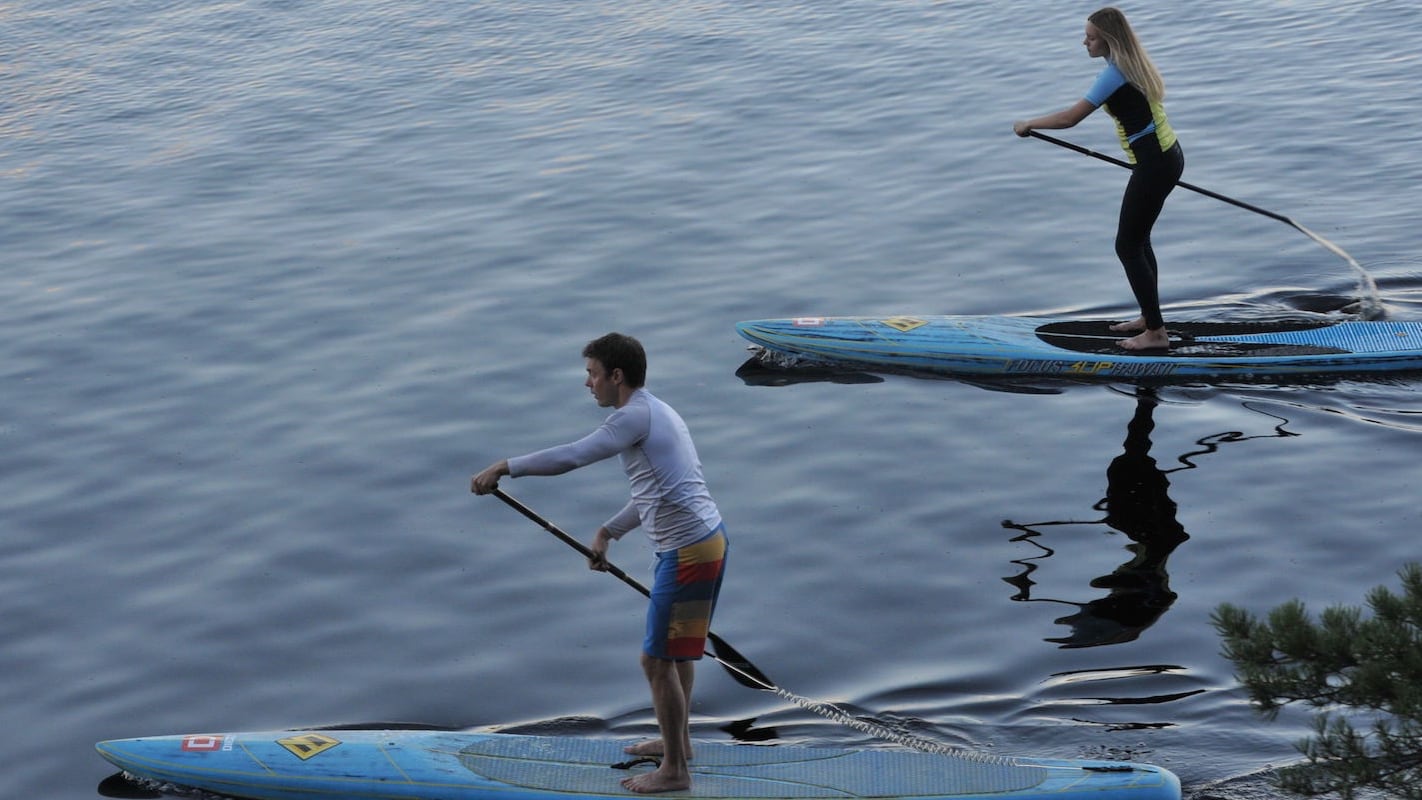
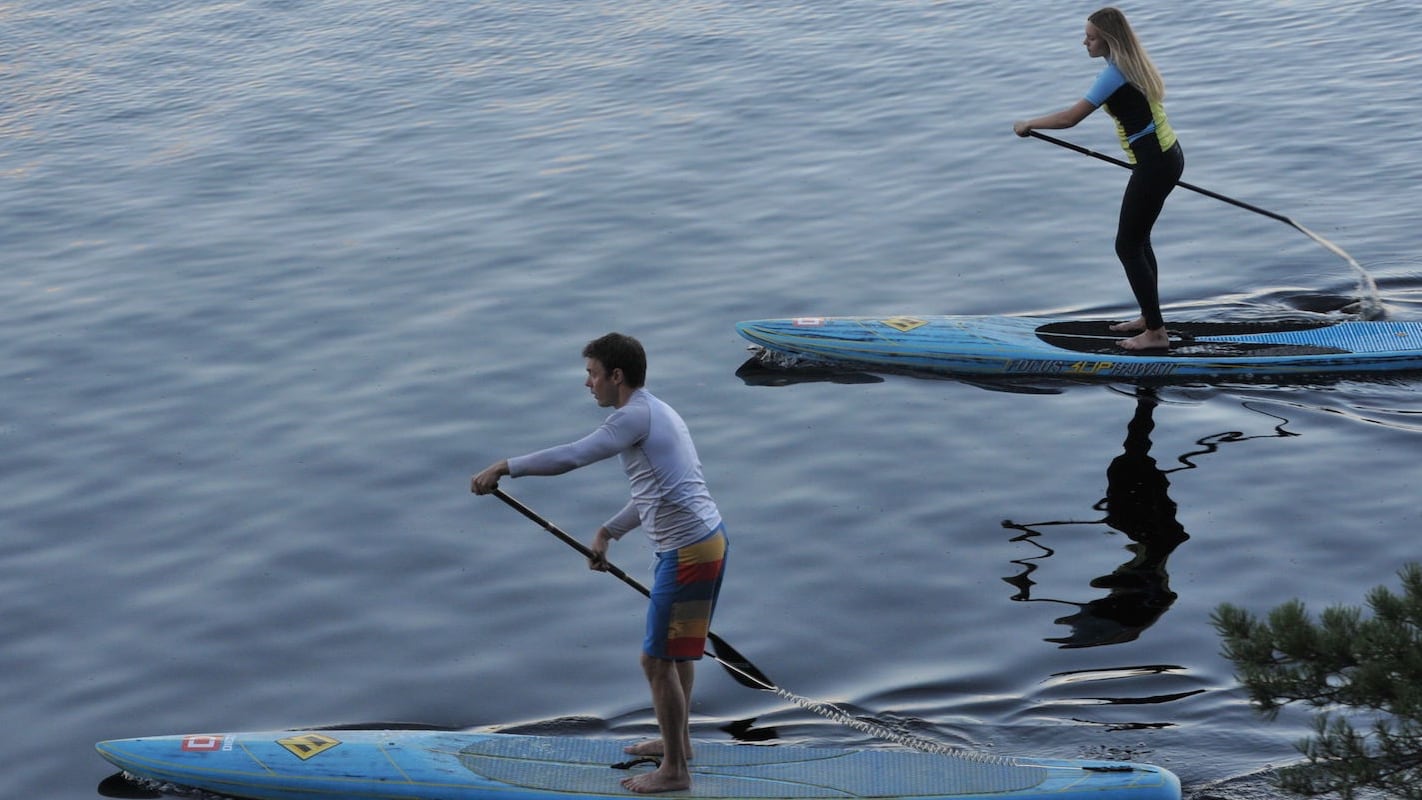
- Surfski
- Racing kayak
- Fitness kayak
- Sea kayak
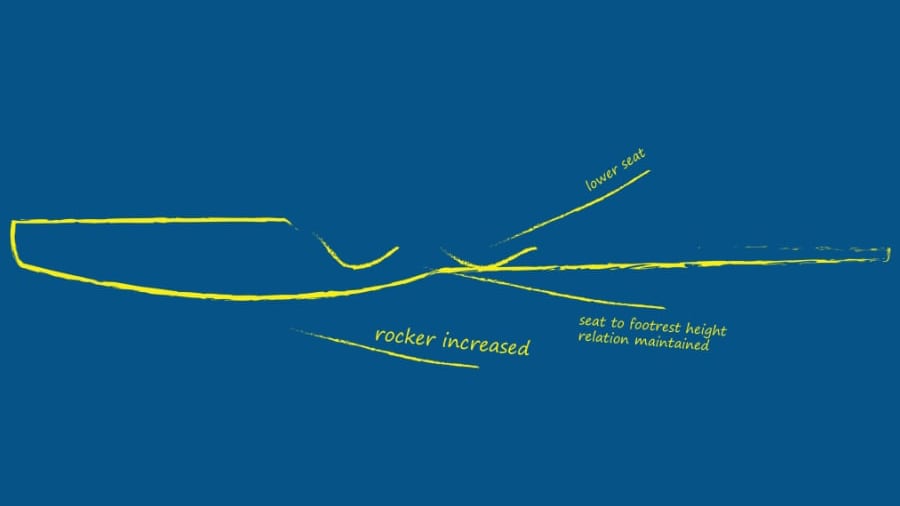
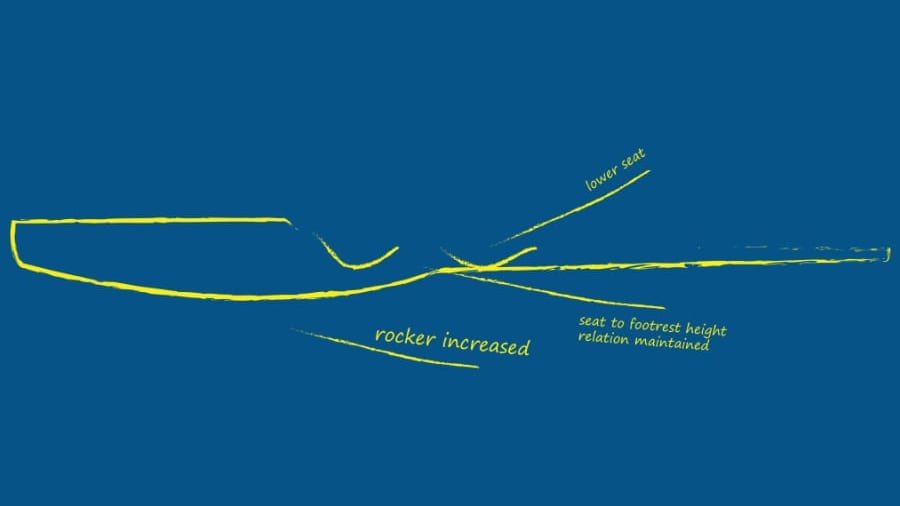
For racing and fitness boats kayaks, the paddle length is about the same, for wide touring/fitness boats you can take the paddle slightly longer. If you raise or lower the seat in the racing kayak, it will affect the paddle length about 2 cm (equal to 1 cm per paddle side) with every centimeter you move the seat in height. In a surfski, you choose a paddle length between 4 - 6 cm shorter than in a racing kayak.
In principle, you can use the same paddle for kayaking and surf skiing if you have a paddle that can be extended enough. Most wing paddles have joints that can be adjusted 10 cm in length. However, if you are paddling a fast racing kayak and want to use the same paddle in a surfski (or sea kayak), you will probably want a slightly smaller blade size for ocean paddling.
How you paddle
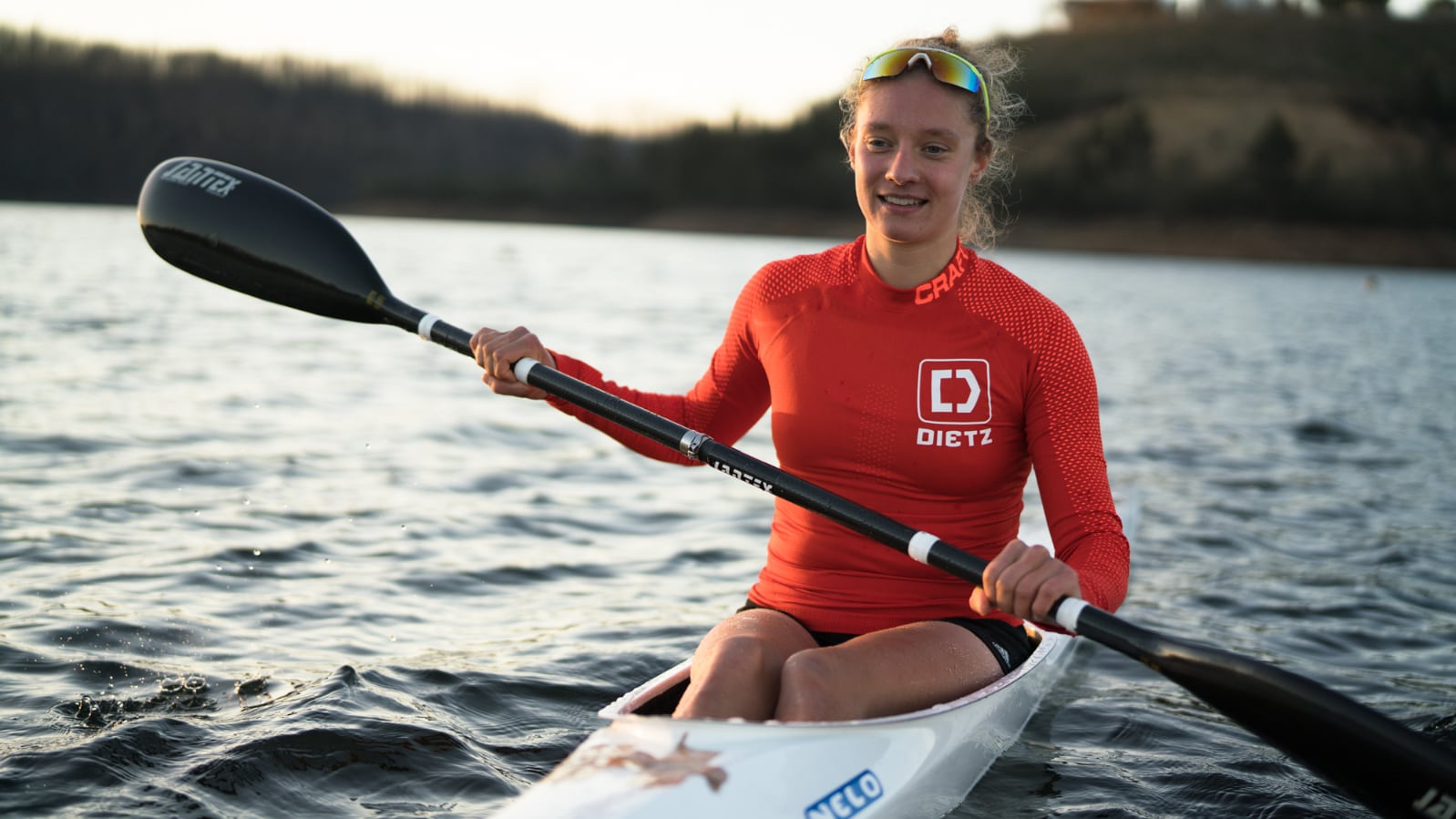
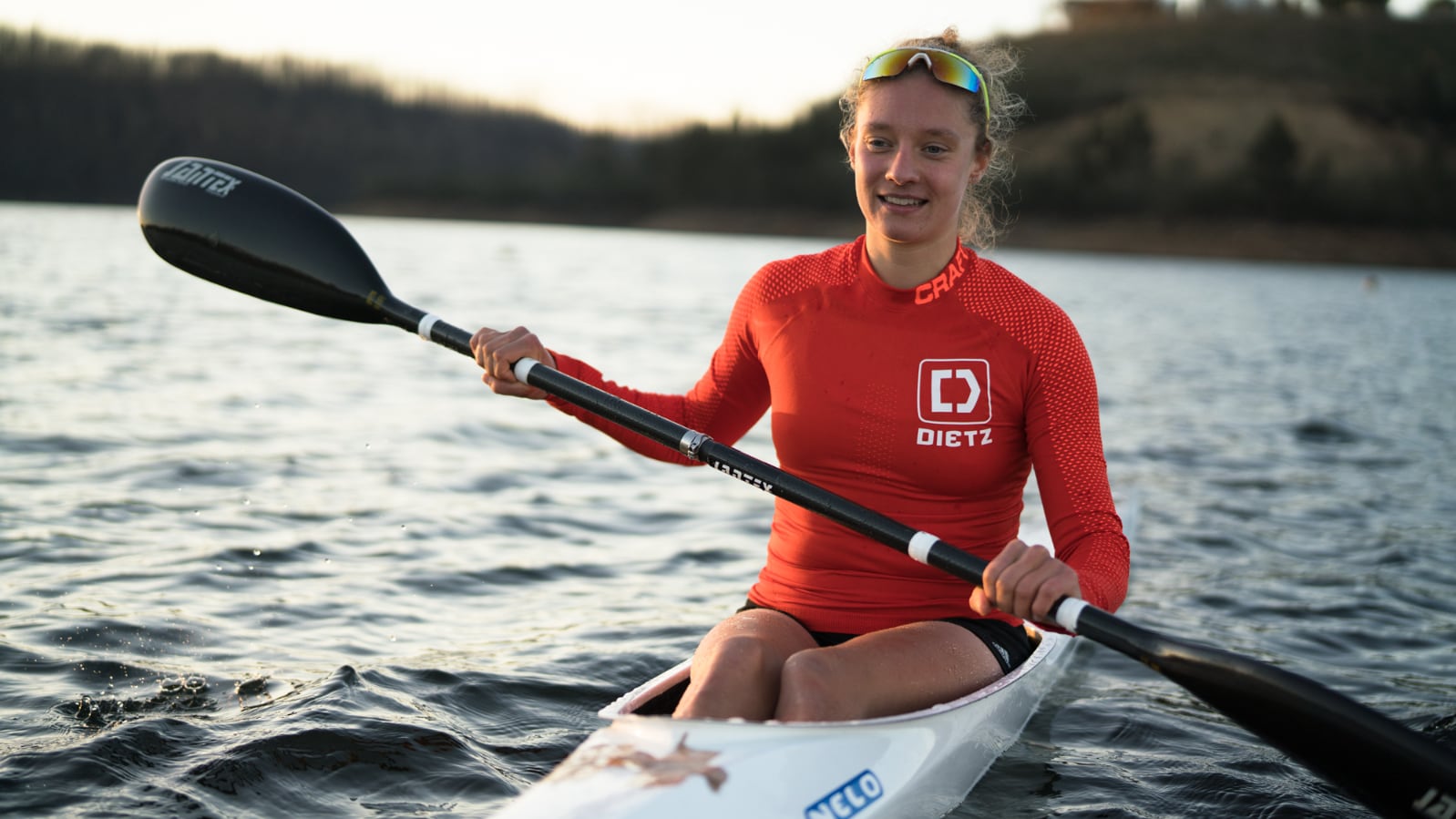
- Steep paddle technique - racing & fitness kayak
- Flatter paddle technique - sea kayak
- Mixed paddle technique - surf ski
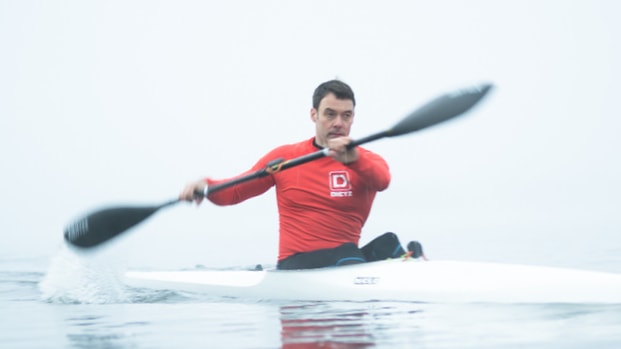
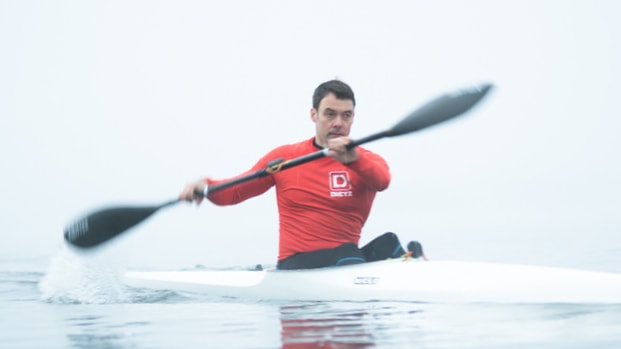
A steep paddling technique primarily means a higher pushing hand when paddling. A steeper technique generally requires a slightly shorter paddle than paddling with a lower technique and the same seat height.
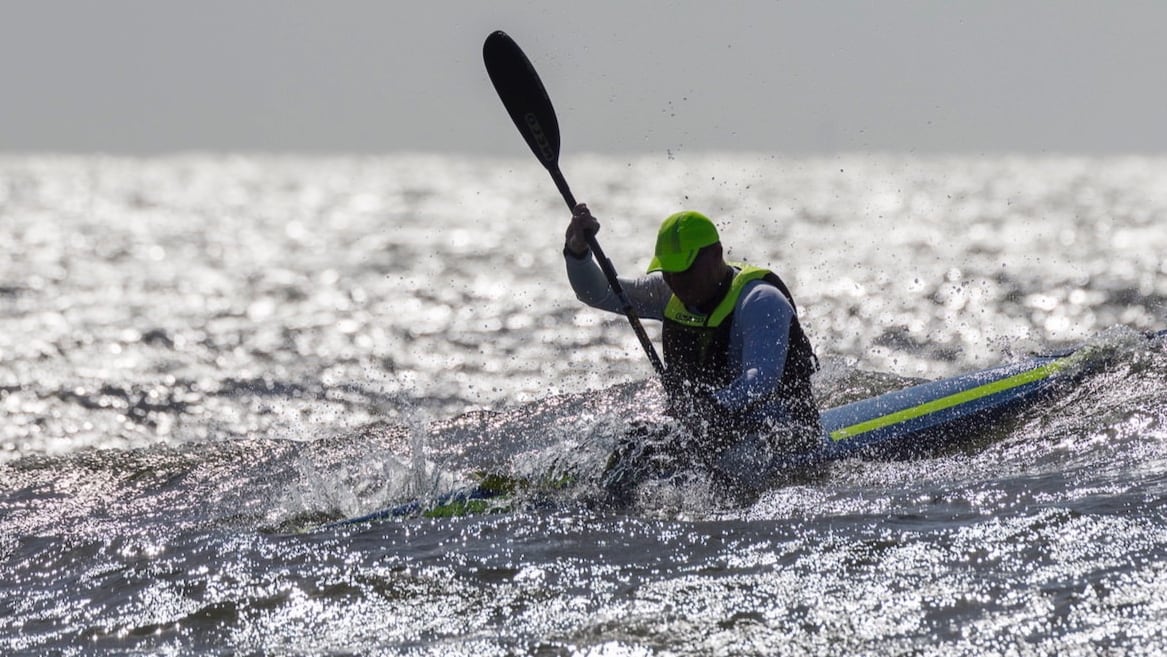
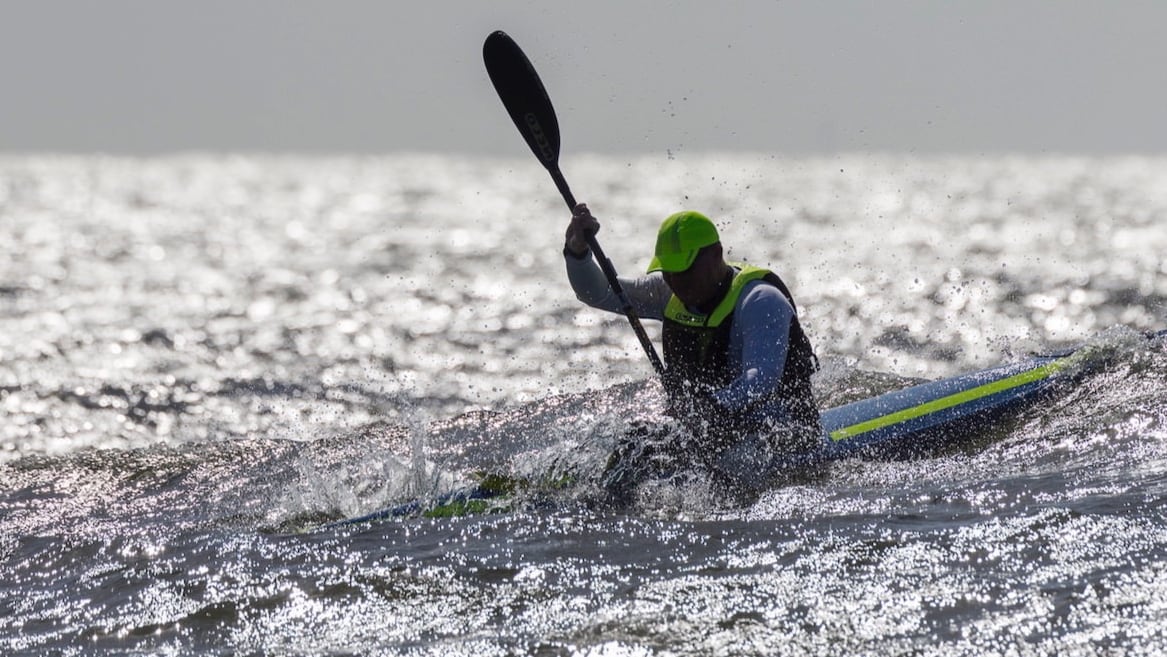
A steep technique is what is aimed for when both the kayak and stability allow it. The pushing hand is then at the height of the eyes or forehead. A flatter technique is automatically obtained in a wider sea kayak or surfski (where the paddling style is further out from the center of the kayak) and when paddling with a lower pushing hand (i.e. at chest to shoulder height), which makes the paddling more relaxed on longer trips in a sea kayak and more stable when, for example, paddling a surfski in larger waves.
Who paddles
The length of your body will obviously affect the length of your paddle the most. It can be added that the paddle can be chosen slightly longer if you have a long upper body in relation to your height. Arm length, on the other hand, hardly matters: long arms don't raise the pushing hand, they only widen the grip and move the catch further forward – the two cancel each other out.
Selecting too short a paddle means that the range per paddle stroke is reduced. If you have too long a paddle, the angle of the paddle will be lower at entry. The power vector of the paddle stroke is shifted downwards (read: the paddle pushes even down instead of only backwards). Thus, the ideal paddle length is primarily determined by the paddle angle with the blade fully immersed and becomes a sweet spot between long reach and an optimal force vector.

How do I calculate my paddle length?
Many years ago we developed a simple formula for paddle length: paddle length = (height + 252) / 2. It has travelled far since – on the Swedish canoe federation's website, as a notice on club walls and on many club websites. For paddlers between roughly 170 and 195 cm it worked well; for shorter paddlers it gave a slightly too long paddle.
That's why we're now replacing it with a new formula. It is the basis of our paddle calculator and has been calibrated against the experience of coaches and athletes – from children of 150 cm to paddlers around 200 cm.
paddle length = 0.6 × height + 108
All figures in cm. Applies to racing kayaks, normal body proportions and a blade that matches your height. If your result falls between two lengths, round down: a centimetre too short costs you next to nothing, a centimetre too long costs angle. Tolerance −2/+1 cm.
For paddlers taller than 180 cm a small deduction applies: (height − 180)² / 200. That is 0.5 cm at 190 cm and 2 cm at 200 cm – the curve flattens out for the tallest. The formula applies to heights of 150–200 cm; if you are taller, get in touch and we'll work out length and blade together.
Source: Dietz Performance Paddling, 2026. You're welcome to use and quote this formula – please credit the source.
Example: height 180 cm → 0.6 × 180 + 108 = 216 cm.
| Height | Paddle length |
|---|---|
| 150 cm | 198 cm |
| 160 cm | 204 cm |
| 170 cm | 210 cm |
| 180 cm | 216 cm |
| 190 cm | 221 cm |
| 200 cm | 226 cm |
Values are rounded down and include the deduction above 180 cm.
For children and juniors the formula applies from about 150 cm. Don't choose a longer paddle “to grow into” – a paddle that is too long forces a flat technique, and that becomes a habit. Children's blades (approx. 45–46 cm) are considerably shorter than adult blades; with those the paddle may be 2–4 cm below the formula. With junior blades (approx. 48–49 cm) the formula fits directly. An adjustable shaft grows with the paddler.
For surfskis and other seat heights, see the adjustments in the section above; the easiest way is our calculator at the end of the page, which accounts for boat type and seat height.
Self-check on the water
The blade is just fully immersed when the pressure starts – and your top hand is roughly at eye level at that moment. If it rises above your forehead, the paddle is too long; if it stays below your chin, it is too short.
Tip: Blade length
The formula assumes a blade that matches your height – as a rule of thumb height/10 + 32 cm, so a 50 cm blade at 180 cm. If you use a considerably shorter or longer blade, every centimetre of blade length changes the paddle length by 2 cm, one per side. When switching brands, carry over the shaft length, not the overall length.
Tip: Grip width
Where your hands belong is not a matter of taste but of body dimensions: the distance from middle-finger knuckle to middle-finger knuckle ≈ 0.4 × height – 72 cm at 180 cm, which is roughly a third of the paddle length. The Olympic paddlers in Sydney 2000 gripped 73 cm (men) and 68 cm (women) on average, and even between sprint and slalom paddlers there was no statistical difference – grip width depends on the body, not the discipline. The old rule “paddle on your head, elbows at right angles” dates from the flat-blade era and results in a grip that is too wide. If you want more leverage, grip 1–2 cm wider; if you want to spare your shoulders, 1–2 cm narrower. Mark your grip position with tape.
Where the formula comes from
Behind the formula is simple geometry: from the water to the top hand the shaft runs diagonally upwards, and that distance grows with seat height, shoulder height and hand height – in other words with your height. Add two blade lengths. The numbers are calibrated against measured data: 149 junior paddlers from Spain and Portugal, the Olympic competitors of Sydney 2000 and Irish national team paddlers – plus thirty years of our own experience. Older rules date from the era of flat blades, which were used considerably longer; even in the early wing years paddles were still around four centimetres longer than today.
